Propel provides innovative insurance solutions to thousands of companies across the country. We make it our business to know your world inside and out.
Commercial, Insights, Real Estate
Evolving Skylines: New Law Requires Washington Landlords to Allow Portable Cooling Devices
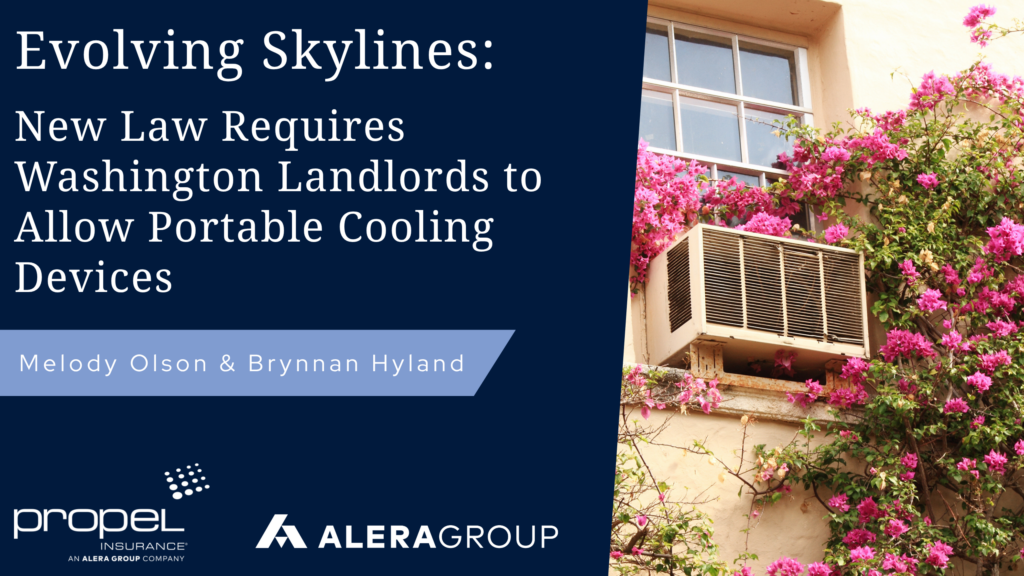
As the weather heats up, tenants may want to install portable cooling devices to beat the heat. Under a new Washington law, ESSB 6200, landlords may not be able to prohibit this. This new law is already in effect, so multifamily property owners and managers need to be aware of their rights and responsibilities.
New Protections for Tenants
ESSB 62001 amends both the Residential Landlord-Tenant Act (RCW 59.18) and the Manufactured/Mobile Home Landlord-Tenant Act (59.20.070) by adding protections for tenants who want to install portable cooling devices.
Tenants have the right to install a portable cooling device of their choice. Except under specific circumstances outlined in the law, landlords cannot:
- Prohibit or restrict a tenant from installing a portable cooling device.
- Charge a fee for the use, inspection, or installation of a portable cooling device. (If the landlord is renting the device to the tenant, the landlord is permitted to charge a rental fee.)
Governor Ferguson signed ESSB 6200 into law on March 24, 2026, and the new law took effect on June 11, 2026.
What Counts as a Portable Cooling Device?
Under the law, a portable cooling device refers to an air conditioner or portable heat pump, including window-mounted air conditioners and devices designed to sit on the floor, that does not require excessive alteration to the unit or excessive use of brackets or other hardware.
What Rights Do Landlords Still Have?
Although the new law prohibits blanket bans on portable cooling devices without justification, landlords do still have rights.
You don’t have to allow portable cooling devices if the unit already has a permanently installed and fully operational heat pump. You can also prohibit or restrict installation if the device would:
- Violate state or local building codes, state or federal law, or the device manufacturer’s written safety guidelines.
- Cause unreasonable damage to the premises or make the premises uninhabitable.
- Require an electrical supply that cannot be accommodated by the existing power service.
For window-mounted devices, there are additional landlord protections. Landlords can prohibit installation if the device:
- Would block the use of a window as an exit if that window is a necessary egress.
- Would prevent the tenant from locking a window that’s accessible from the outside.
- Cannot be installed securely to prevent it from falling.
- Is expressly restricted or prohibited in the landlord’s insurance policy.
- Would require the excessive use of brackets or other hardware that would cause damage or void the window’s warranty.
What Landlords Can Notify Tenants
Landlords may need to notify their tenants and update their leases.
- If you are going to prohibit or restrict the installation of window-mounted devices, you are required to notify your tenants of this, along with their rights and responsibilities, in the lease.
- If a tenant chooses to install a portable cooling device, you can require an inspection or servicing after installation. You can also require proper drainage.
- Your tenants must give you at least two days’ notice before installing a window-mounted portable cooling device.
Although the protections should help landlords feel more comfortable with the new law, evolving regulations mean landlords must remain vigilant. As part of Alera Group, Propel Insurance and Legacy Risk can help landlords navigate changing regulations, evaluate evolving risks, and secure coverage that protects your business.
Work with your insurance broker and legal counsel to understand the implications of the new law and any potential coverage or liability concerns. Contact us to learn how we can help you evaluate your risk and protect your assets.
Sources:
1. https://app.leg.wa.gov/billsummary?Year=2025&BillNumber=6200

Melody Olson
Melody has spent over 20 years specializing in real estate, construction, and project risk insurance. Melody is known by clients and colleagues for having strong technical expertise, creative problem-solving skills, and relentless client advocacy. More about Melody...

Brynnan Hyland
With over a decade of industry experience, Brynnan brings a strong underwriting background with a focus on complex risks and program design. By analyzing client risk profiles and tailoring coverage solutions, Brynnan delivers clear guidance and a strategic approach to risk management.