Propel provides innovative insurance solutions to thousands of companies across the country. We make it our business to know your world inside and out.
Claims & Risk Management, Commercial, Construction, Insights
Evolving Skylines: Water Damage – The Silent Driver of Risk for Real Estate & Construction
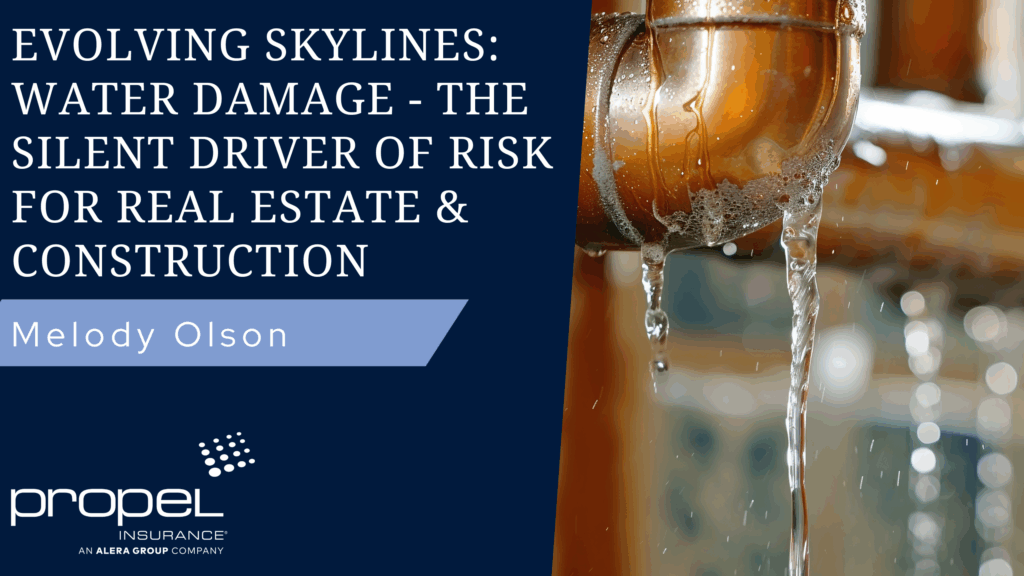
When owners, contractors, and developers think about insurable exposures, fire and natural catastrophes often top the list. Yet across the construction and real estate industry, water damage consistently ranks amongst the top of the list for the most frequent but also some of the most severe claims when it comes to property damage. The prevalence and heightened risk are causing decision makers to reshape how they structure their insurance program, job-site protocols, and manage overall risk.
Why Water Losses Are So Costly
Water damage claims are deceptively expensive because they often affect multiple systems and stakeholders simultaneously:
- Property Damage Impact: A single leak can compromise structural components, electrical systems, and finishes, multiplying losses. Leaks can cause damage over time and can go undetected. A burst pipe or overflowing sink/toilet is also a culprit for large property claims.
- Business interruption: Mitigation and reconstruction delays frequently trigger additional delay expense and/or loss of income in properties where rental of space that is damaged is compromised.
- Mold growth: Secondary contamination raises remediation costs and potential pollution liability exposures.
- Tenant and owner claims: In multifamily or mixed-use developments, one incident can spark numerous third-party claims. In one recent case, Multifamily Dive reported a $6.6 million verdict for tenants suing over toxic mold in their apartment complex.
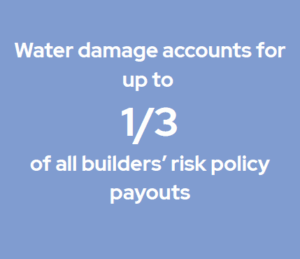 According to Construction Business Owner, water damage accounts for up to one-third of all builders’ risk (property under construction) claims, and the size of the claims are on the rise. Carriers are responding by introducing separate and higher water damage deductibles on both builders’ risk and permanent property policies to manage the severity and frequency of these losses.
How Water Risk Hits the Total Cost of Risk
Water-related claims don’t just impact one project. They ripple across an organization’s entire insurance program and financial strategy:
- Higher premiums: Frequent or severe water damage claims can impact rates and future renewal premiums.
- Reduced coverage terms: Many carriers are tightening terms, applying distinct water-damage deductibles, or, in some cases, sub-limiting coverage.
- Loss of capacity: Some insurers are scaling back appetite for high-rise, multifamily, or hospitality projects with water loss history.
- Uninsured costs: Deductibles, downtime, reputational harm, and limited/excluded reimbursement for remediation work drive up retained losses.
These pressures have made it critical to align coverage strategies across both builders’ risk (during construction) and permanent property (post-completion) phases, ensuring a seamless transition of protection once projects are placed in service.
Managing Water Risk in Construction & Development
Because water losses can be mitigated, underwriters expect proactive risk management throughout a project’s lifecycle.
Plan and Prepare:
Assess designs for drainage and waterproofing vulnerabilities, define responsibilities for water intrusion in contracts, and ensure builders’ risk and property coverage transition seamlessly at project completion.
Protect and Monitor:
Use of leak detection technology, temporary waterproofing, and frequent inspections, especially after rain or plumbing tie-ins.
Document and Train:
Keep site logs, establish quick-response protocols, and train crews to identify and address leaks immediately.
Align Coverage:
Review both builders’ risk and property policies for deductibles, exclusions, and sublimits, and confirm consistency across all parties and coverage phases.
Real-World Claims Examples
Several recent water-related incidents affecting construction projects have led to major losses.
One involved a mechanical failure atop a multi-story building, resulting in a high six-figure claim. Another saw a failed water line connection caused $5 million in damages. A third case involved a ruptured line near completion of a project in a large residential building, delaying occupancy by nearly a year and triggering a seven-figure loss.
These examples show how routine system failures can escalate into costly setbacks for developers.
Strategic Takeaway
Water damage is no longer a routine loss; it’s one of the most disruptive and costly exposures in modern construction and property ownership. As water claims rise in both frequency and severity, insurers are responding with new deductibles and coverage limits that demand strategic attention.
For contractors, developers, and property owners, the solution lies in integrating risk management from construction through occupancy. By combining proactive water mitigation, sound documentation, and well-structured insurance programs, firms can better control costs, reduce claims, and protect their long-term investment.
Propel’s Real Estate and Construction Practice Groups are helping clients rethink their total cost of risk and how to navigate water damage exposures. From pre-construction planning to builders’ risk to permanent property coverage, our team helps you anticipate vulnerabilities before they flood your bottom line. Whether it’s negotiating coverage terms, aligning water damage deductibles to risk tolerance, or modeling loss scenarios, we’re here to help you build smarter and stay protected. Please feel free to contact Propel to learn more about how we can provide value to your program.
Sources:
Multifamily Dive, Jury awards over $6.6M to tenants in toxic mold lawsuit. Published 2/18/25
Construction Business Owner, Prevent Water Damage From Wreaking Havoc. Published 7/5/25

Melody Olson
Melody has spent over 20 years specializing in real estate, construction, and project risk insurance. Melody is known by clients and colleagues for having strong technical expertise, creative problem-solving skills, and relentless client advocacy. More about Melody...

Brynnan Hyland
With over a decade of industry experience, Brynnan brings a strong underwriting background with a focus on complex risks and program design. By analyzing client risk profiles and tailoring coverage solutions, Brynnan delivers clear guidance and a strategic approach to risk management.