Propel provides innovative insurance solutions to thousands of companies across the country. We make it our business to know your world inside and out.
Catastrophic Storms, Claims & Risk Management, Disaster Preparedness, Insights, Senior Care
Water Intrusion − The Claims Monger: Preparing for the Immediate Need and Continuing Risk
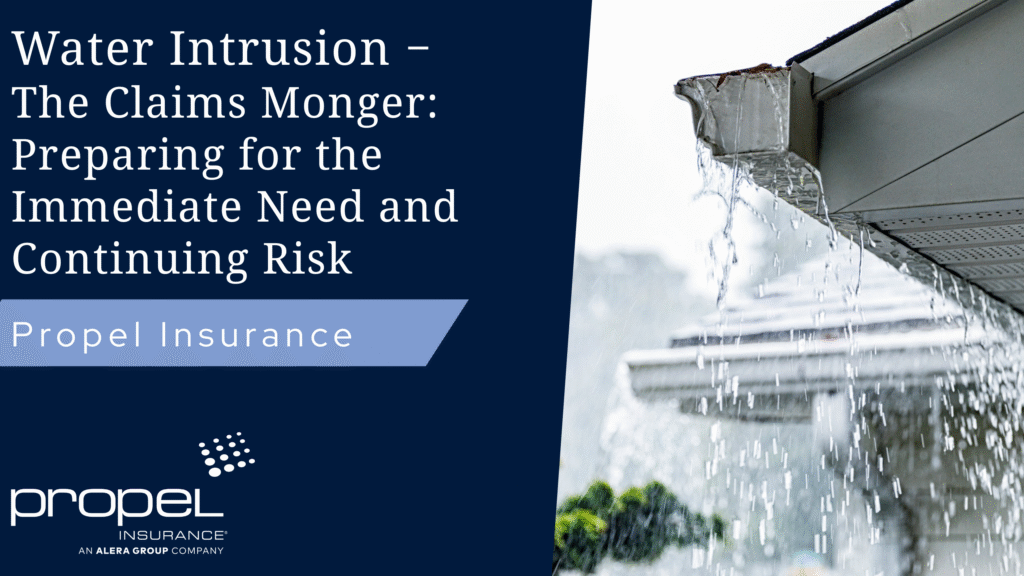
Proactive planning for this exposure is essential as it serves as a safeguard for business interruption, loss of assets, which can stagnate financial plans, and resulting property damage leading to elongated structural damage claims and time-consuming repair.
How Does Water Damage Occur?
Water damage in commercial properties can occur through various sources and situations. Understanding these potential causes is essential for effective prevention and mitigation.
- Plumbing Failures: Leaking or burst pipes, faulty plumbing fixtures, or damaged supply lines. These failures can result from aging infrastructure, corrosion, freezing temperatures, or excessive water pressure.
- Roof Leaks: Roof leaks can occur due to damaged or deteriorating roofing materials, clogged gutters, blocked roof drains, or the penetration of debris and tree branches. Heavy rainfall or melting snow can exacerbate roof-related issues.
- HVAC System Issues: Air conditioning units, heating systems and ventilation systems can generate condensation or develop leaks. Improper maintenance, clogged drains, or faulty components within these systems can contribute to water damage.
- Foundation and Structural Damage: Poor drainage, cracks in the building’s foundation, or inadequate waterproofing can allow groundwater or rainwater to seep into basements and lower levels, causing structural damage and water infiltration.
- Flooding: Events such as heavy rain, storms, flash floods or rising groundwater levels can result in flooding. Inadequate drainage systems or improper grading around the property can exacerbate flood-related damage.
- Sprinkler System Malfunctions: Fire sprinkler systems can malfunction due to manufacturing defects, frozen pipes, corrosion, or accidental activation. A faulty sprinkler system can release a significant amount of water quickly.
- Appliance and Equipment Failures: Malfunctions or leaks from appliances such as water heaters, dishwashers, refrigeration units, and ice machines can cause water damage in commercial kitchens and utility areas.
- Human Error: Accidental spills, negligence or errors during maintenance or construction work can lead to water damage. For example, a contractor may damage a water supply line while performing renovations.
- Storm Damage: Severe weather events, including hurricanes, tornadoes, and heavy storms, can result in significant water intrusion and damage to commercial properties, especially if the building envelope is compromised.
- Sewage Backups: Sewer line blockages, sewage system overflows or sewage backups can introduce contaminated water, posing health risks and extensive damage.
- Window and Door Seal Failures: Damaged or deteriorated seals around windows and doors can allow rainwater to penetrate the building, leading to water damage over time.
- Vandalism and Property Damage: Deliberate acts of vandalism or property damage, such as puncturing water pipes, can cause water damage to commercial properties.
Proactive Planning is Essential
Preventing water damage involves maintenance, regular inspections, swift response to leaks or issues and having a well-defined water damage prevention plan in place.
Water damage incident pre-planning should include the following inspection priorities:
- Conduct regular inspections of water and liquid systems.
- Prepare water damage response material and vendors.
- Inspect plumbing, HVAC systems, automatic sprinkler systems, roofs, roof-mounted equipment, drains, downspouts, and other components.
- Closely analyze any signs of water leaks, such as stains or pooling.
- Ensure timely repair of even small leaks.
- Create a detailed map of all water and liquid systems within the building.
- Clearly label all water shut-off control valves for easy access.
- Designate and train staff members on each shift to have the authority to shut off water valves in case of an incident.
- Schedule annual maintenance to exercise and lubricate water shut-off valves to ensure they function smoothly during water-related events.
- Implement a preventive maintenance program targeting vulnerable areas of exposure.
- Review the plan annually and provide continuous training to employees, including new hires and refresher courses.
- Designate key personnel and define administrative responsibilities in the event of on-site water damage.
- Maintain an up-to-date list of emergency contacts.
- Establish a contingency plan for addressing severely damaged areas, including procedures for relocations if necessary.
- Conduct regular employee training and drills.
- Establish agreements with suppliers for emergency deliveries.
- Be aware of local regulations related to water damage prevention and compliance.
- Arrange access to large generators and fuel for powering pumps, wet/dry vacuums, dehumidifiers, blowers, or other equipment, particularly if there is an elevated risk of power loss in the concerned area.
- Employ an after-hours/weekend security monitor capable of overseeing various risks, including theft, vandalism, trespassing, fire, and power loss to critical systems; for example: temporary heaters, dewatering pumps, water infiltration from storms, and water release incidents.
- Install remote monitoring systems with cellular reporting capabilities. These systems can monitor for unauthorized access/intrusion, smoke/fire, temperature and humidity levels, water sensors, unusual changes in water flow for mechanical systems, and more.
To report damage to your Propel claims team.
Standard claims phone number 844-776-7352 or online
Additional guidance and resources on Catastrophic Events can be found here.
